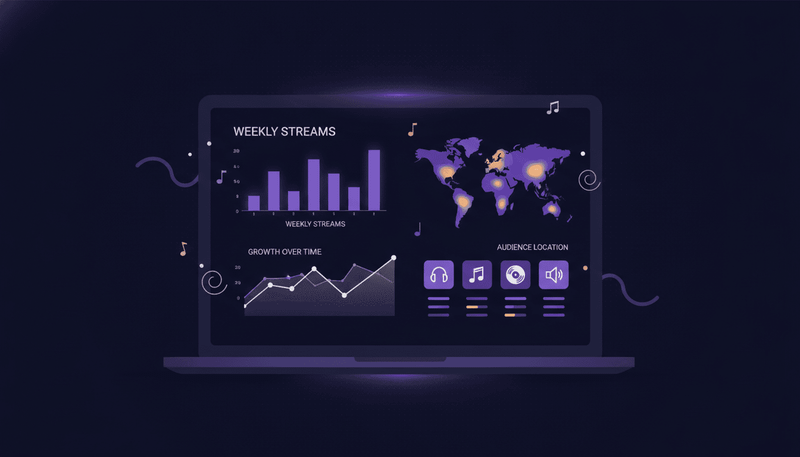
Playlist Genre Analyzer: How to Categorize and Optimize Your Playlists in 2026
A playlist genre analyzer is a tool that breaks down the genre composition of any playlist, track by track. It shows curators, artists, and A&R teams exactly what sonic DNA defines a playlist so they can make smarter decisions about curation, pitching, and signing. Instead of guessing whether a playlist leans indie pop or bedroom R&B, a genre analyzer gives you a data-backed answer in seconds. This guide covers how playlist genre analyzers work, why they matter for every role in the music industry, and how to use genre data to build better playlists and land more placements.
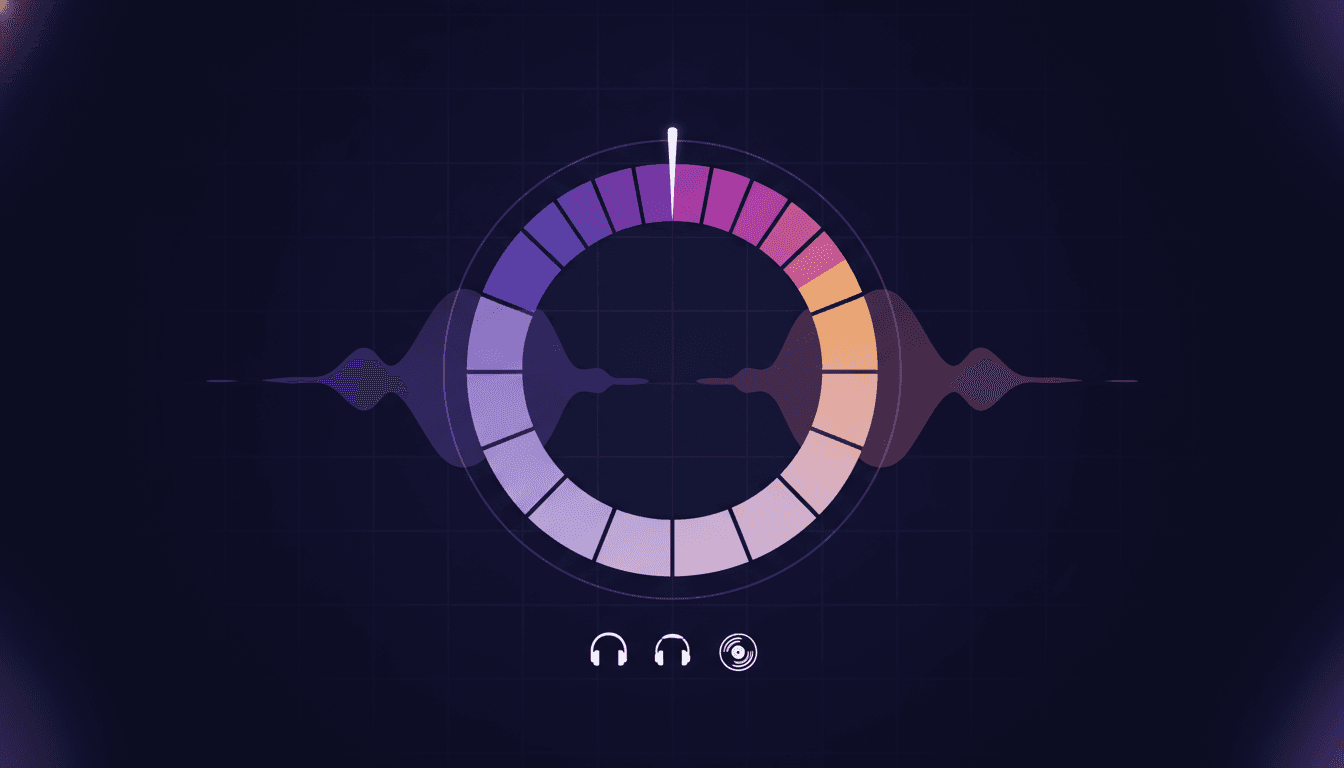
Every playlist has a genre fingerprint. A playlist genre analyzer reads that fingerprint by examining audio features, metadata tags, and listener behavior patterns to tell you exactly what sonic territory a playlist covers, where it blends genres, and how it compares to similar playlists in the market.
For curators, this means tighter editorial control. For A&R teams, it means spotting genre trends before they hit mainstream charts. For artists and managers, it means finding the right playlists to pitch to and understanding where your sound fits in the broader landscape.
What Is a Playlist Genre Analyzer?
Quick answer: A playlist genre analyzer is a tool or methodology that breaks down the genre composition of a playlist by examining each track's audio characteristics, metadata tags, and listener engagement patterns. It outputs a percentage-based genre breakdown, identifies cross-genre blends, and highlights tracks that deviate from the playlist's core sonic identity.
A basic genre analyzer might tell you a playlist is "70% indie rock, 15% dream pop, 10% shoegaze, 5% other." A sophisticated one goes further: it maps the energy distribution across tracks, flags genre outliers that might be hurting retention, and identifies emerging micro-genres gaining traction inside your playlist before they have an official label.
Genre analysis has moved beyond simple tag matching. In 2026, the most useful analyzers combine three data layers: what the audio sounds like (tempo, key, instrumentation, vocal characteristics), what the metadata says (genre tags, artist classifications, release context), and how listeners actually behave (save rates, skip patterns, cross-playlist movement). The third layer is the most valuable and the hardest to access without private playlist data.
Why Genre Analysis Matters for Curators and Artists
Quick answer: Genre analysis turns editorial instinct into measurable decisions. Curators use it to maintain playlist cohesion, spot emerging genre blends, and reduce skip rates. Artists use it to identify which playlists match their sound and which curators to target. A&R teams use it to map genre trends 3 to 6 months ahead of public charts.
For curators
A playlist that drifts too far from its genre core loses listeners. Genre analysis gives you an objective view of where your playlist sits sonically. If your "chill electronic" playlist has quietly shifted to 30% ambient pop because of recent adds, that drift explains the retention drop. Course-correct before followers leave.
Genre analysis also reveals your playlist's competitive position. How does your indie rock playlist compare to the 50 other indie rock playlists in the ecosystem? If yours has a distinctive shoegaze blend that others lack, that is your editorial edge. Lean into it.
For artists and managers
Knowing your genre breakdown helps you pitch to the right playlists. An artist who describes their sound as "indie pop" but whose tracks analyze as 60% bedroom pop and 25% lo-fi is pitching the wrong curators. Genre analysis aligns your perception with the data, making every pitch more targeted.
For labels and A&R
Genre analysis across thousands of playlists reveals macro trends that individual listening cannot. When music trend analysis shows "Afro-fusion" tracks increasing from 3% to 12% of independent curator playlists over six months, that is a signal worth acting on. Understanding how music discovery works at the data level separates teams that spot trends early from those that react late.
How Playlist Genre Analysis Works
Quick answer: Modern genre analysis layers three detection methods: audio feature analysis (what the music sounds like), metadata and tag analysis (how the music is classified), and listener behavior signals (how audiences actually respond). Each layer catches what the others miss. Combined, they produce a genre profile that is far more accurate than any single method alone.
Audio Feature Detection
Audio feature detection examines the raw sonic properties of every track in a playlist. The key features include:
- Tempo (BPM): Dance music clusters at 120-130 BPM. Hip-hop sits around 80-100 BPM. Ambient and downtempo live below 90 BPM. Tempo alone separates broad genre families.
- Key and mode: Major keys correlate with pop and dance music. Minor keys dominate hip-hop, R&B, and indie. Modal patterns (Dorian, Mixolydian) signal jazz influence or progressive rock.
- Instrumentation density: How many distinct instruments are active at any given moment. Electronic music tends toward layered synths. Singer-songwriter material stays sparse. This metric catches the "feel" of a genre beyond labels.
- Vocal characteristics: Vocal presence, pitch range, and processing (auto-tune, reverb depth, distortion) all carry genre information. Heavy vocal processing suggests pop, hip-hop, or hyperpop. Clean, unprocessed vocals lean acoustic or folk.
- Spectral energy distribution: Where the sonic energy concentrates across the frequency spectrum. Bass-heavy profiles indicate hip-hop, trap, or EDM sub-genres. Midrange-dominant profiles suggest rock, folk, or classical.
Audio feature detection works best for distinguishing broad genre families. It struggles with sub-genres that share similar production techniques but differ in cultural context or lyrical content.
Metadata and Tag Analysis
Every track carries metadata: artist genre tags, release genre classifications, label categorizations, and platform-assigned genre labels. Metadata analysis aggregates these tags across all tracks in a playlist to build a genre profile.
Strengths: Fast, widely available, and good at capturing sub-genre distinctions that audio analysis misses. A track tagged "Afrobeats" and one tagged "dancehall" may sound similar on audio features but serve different audiences and markets.
Limitations: Tags are often inaccurate, outdated, or overly broad. An artist tagged "alternative" in 2020 may have shifted to "hyperpop" by 2026. Tags reflect how distributors classified the music at upload time, not necessarily how listeners experience it today.
The best approach: use metadata as a starting layer, then validate with audio features and listener behavior.
Listener Behavior Signals
This is the most revealing and least accessible layer. Listener behavior signals show you how real audiences interact with genre-blended content:
- Save patterns by genre cluster: When listeners save track A (indie rock) and track B (dream pop) from the same playlist but skip track C (punk), they are telling you the playlist's genre ceiling. Punk falls outside this audience's comfort zone.
- Cross-playlist movement: A track that moves from indie rock playlists to electronic playlists within 30 days signals a cross-genre breakout. Tracking this movement across private playlist data reveals genre trends that public charts miss by weeks.
- Retention correlation by genre tag: If tracks tagged "neo-soul" retain listeners at 45% monthly while tracks tagged "R&B" retain at 28% in the same playlist, the audience prefers the neo-soul end of the spectrum. Optimize accordingly.
For a deeper look at reading listener signals, see our guide to understanding the music analytics workflow.
5 Ways to Use Genre Analysis for Better Playlists
Quick answer: Genre analysis is not academic classification. It is an operational tool. Use it to tighten playlist cohesion, catch genre drift before it hurts retention, identify cross-genre opportunities, benchmark against competitors, and optimize pitch targeting. Each application produces a measurable outcome.
1. Audit playlist cohesion
Run a genre breakdown on your playlist monthly. If your "lo-fi hip-hop" playlist has drifted to 40% ambient electronic, you have a cohesion problem that explains declining save rates. Set a genre cohesion target (e.g., 70%+ core genre, 15-20% adjacent, 10% or less outlier) and prune tracks that fall outside it.
2. Spot emerging genre blends
When genre analysis shows a new combination appearing across multiple independent playlists simultaneously, that is a trend signal. "Afro-electronic" tracks increasing from 2% to 10% across curator playlists over three months indicates organic genre emergence. Curators who build dedicated playlists around emerging blends before they have a Wikipedia page capture first-mover audience. Music24 reads millions of public playlists and charts every day, showing which tracks and artists are gaining playlists fastest in a genre.
3. Reduce skip rates with genre-aware sequencing
Skip rates spike when genre transitions are too abrupt. A jazz track followed by a trap beat at position 8 breaks the listener's flow. Genre analysis lets you sequence tracks so transitions stay within adjacent genre territory. The result: smoother energy arcs and lower skip rates across every position.
4. Benchmark your playlist against the market
How does your playlist's genre profile compare to the top 20 playlists in the same niche? If every competitor leans 80% into core genre tracks, and you are at 60%, your editorial identity is weaker. If you are at 85% with a distinctive sub-genre blend no one else has, that is your competitive moat.
5. Optimize pitch targeting for artists
Artists waste pitches on playlists that do not match their sound. Genre analysis of a target playlist tells an artist exactly whether their track fits before they pitch. A track that analyzes as "70% bedroom pop, 20% indie folk" should target playlists with similar profiles, not broad "indie" playlists where it competes against harder-edged tracks.
For more playlist curation techniques that pair with genre analysis, see our complete curation guide.
Genre Analysis Approaches: Comparison Table
Quick answer: No single genre analysis method is complete on its own. Audio-based analysis catches sonic properties but misses cultural context. Metadata analysis is fast but often inaccurate. Listener behavior analysis is the most predictive but requires access to private data. The best results come from combining all three.
| Approach | Data source | Strengths | Limitations | Best for |
|---|---|---|---|---|
| Audio feature analysis | Raw audio (tempo, key, spectral) | Objective, consistent, catches sonic properties human ears miss | Misses cultural context; sub-genres with similar production sound identical | Broad genre family classification, energy mapping |
| Metadata/tag analysis | Distributor tags, platform classifications | Fast, captures sub-genre distinctions, widely available | Tags are often outdated, inaccurate, or overly broad | Initial categorization, filtering by named genres |
| Listener behavior analysis | Save rates, skip patterns, cross-playlist movement | Most predictive of actual audience response; reveals genre preferences audiences act on | Requires access to private playlist data; smaller sample sizes | Genre trend detection, audience-validated classification |
| Hybrid (all three) | Combined audio + metadata + behavior | Most accurate and actionable; catches what each layer alone misses | Higher complexity, more data required | Professional curation, A&R trend analysis, editorial strategy |
How Music Industry Professionals Use Genre Data
Quick answer: A&R teams use genre data to spot breakout micro-genres months before Billboard notices. Sync licensing teams use it to match tracks to briefs with precision. Marketing teams use it to target campaigns at genre-specific audiences. Each role extracts different value from the same underlying analysis.
A&R Trend Spotting
A&R professionals track genre composition shifts across thousands of playlists to identify emerging trends. When "Latin trap" tracks increased from 1% to 8% of independent hip-hop playlists over a single quarter, A&R teams using genre analytics spotted the wave months before mainstream recognition.
Build internal dashboards that track genre percentage shifts across curator playlists monthly. Set alerts for any micro-genre that grows more than 3 percentage points in a 90-day window. That threshold consistently identifies trends early enough to sign artists before their signing price reflects the hype.
The step-by-step emerging artist discovery guide covers how genre data feeds into a complete scouting workflow.
Sync Licensing Match
Sync teams need tracks that match specific mood-genre-tempo briefs. A brief asking for "upbeat Afropop, 110-120 BPM, major key, female vocal" is a genre analysis query. Teams that run their catalog through genre analyzers can respond to briefs in hours instead of days because every track is already classified across dozens of parameters.
Build a genre-analyzed catalog with standardized tags: primary genre, secondary genre, tempo range, energy level, vocal presence, instrumentation profile, and mood descriptors. This index turns sync searches from "listen to 200 tracks" into "filter to 12 candidates, listen to those."
Marketing Campaigns
Genre data tells marketing teams which audiences to target and which creative angles to use. A campaign for an artist whose genre analysis reads "65% indie pop, 25% dream pop, 10% shoegaze" should target fans of all three genres, with creative messaging that emphasizes the blend.
Platform ad targeting in 2026 supports genre-level audience selection on Spotify, YouTube, and Meta. Genre analysis of your artist or playlist gives you the exact targeting parameters to use. No guesswork. No wasted impressions on audiences who do not connect with the sound.
For curators specifically, understanding the role of music curators in the broader ecosystem helps frame how genre data serves different stakeholders. And for a visual overview of genre relationships and how they map to listener communities, explore our visual guide to understanding music genres.
FAQ
What is a playlist genre analyzer?
A playlist genre analyzer examines every track in a playlist to produce a percentage-based genre breakdown. It uses audio feature detection (tempo, key, instrumentation), metadata tags, and listener behavior data to determine the sonic composition. The output tells you exactly what genres a playlist covers, how they blend, and where outlier tracks exist.
How accurate are playlist genre analyzers?
Accuracy depends on the method. Audio-only analyzers achieve roughly 70 to 80% accuracy for broad genre families but struggle with sub-genres. Metadata-based analyzers are faster but limited by tag quality. Hybrid analyzers that combine audio, metadata, and listener behavior reach the highest accuracy because listener actions (saves, skips, cross-playlist movement) validate whether a classification matches real audience perception.
Can genre analysis help me get on more playlists?
Yes. Genre analysis of your own tracks tells you exactly which playlist niches match your sound. Instead of pitching broad "indie" playlists, you can target curators whose playlists match your specific genre blend (e.g., "bedroom pop with lo-fi production"). Targeted pitches convert at higher rates because the fit is data-validated, not assumed.
How often should I analyze my playlist's genre composition?
Monthly analysis catches drift before it damages retention. If you add 3 to 5 new tracks weekly, your genre profile shifts over time. A monthly check ensures your playlist stays within your intended genre corridor. Set a target: 70%+ core genre, 15-20% adjacent, 10% or less outlier.
What is the difference between genre tags and actual genre analysis?
Genre tags are labels assigned by distributors, artists, or platforms when music is uploaded. They reflect how someone classified the music at a single point in time. Genre analysis examines the actual audio properties, metadata, and listener response to determine how the music functions sonically and how audiences perceive it. Tags say what the music was called. Analysis says what it sounds like and how listeners treat it.
Can genre analysis predict music trends?
Genre analysis across large playlist datasets is one of the strongest trend prediction tools available. When a micro-genre's share of independent curator playlists grows from 2% to 8% over 90 days, that growth pattern has historically predicted mainstream recognition 3 to 6 months later. The key is analyzing private playlist behavior, not just public playlists, because private saves reveal genuine listener preference before the industry narrative forms.
Get your music heard. Grow the fans who stay.
Add a song. music24 makes the posts and the videos, plans your release and publishes it on every channel. Free for 7 days on the Pro plan, no card.